Speech Pathology · Yagoona
Aphasia Therapy for Adults
Support to rebuild talking, understanding, reading and writing after a stroke or brain injury, for the person with aphasia and the people closest to them.
Overview
Understanding Aphasia
Aphasia is a language difficulty caused by damage to the parts of the brain that handle language, most often after a stroke. It can also follow a head injury or brain tumour, or develop gradually with a condition such as primary progressive aphasia.
Aphasia affects language, not intelligence. People with aphasia usually know exactly what they want to say, but finding the words, following a conversation, reading or writing can suddenly become hard. That can be frustrating and isolating, both for the person and for their family.
The encouraging part is that language can keep improving, often for months and years after a stroke. Speech Pathology helps rebuild skills, find other ways to get the message across, and keep the person connected to the conversations, roles and relationships that matter to them.
Signs & symptoms
Signs of Aphasia
Everyone's experience is different. If any of the signs below sound familiar, it's worth reaching out for a professional opinion, even if you're not sure.
Sudden difficulty speaking or understanding, especially with facial drooping or arm weakness, can be a sign of stroke. Call 000 immediately.
What to expect
Our Assessment Process
We know assessments can feel daunting. Our process is thorough but warm, and we take the time to understand the whole person, not just the diagnosis.
Referral and Background
Refer through our online form or give us a call. We'll ask about the stroke or injury, current health and medications, and request any hospital or rehabilitation reports so we can build on the work already done.
Assessment Appointment
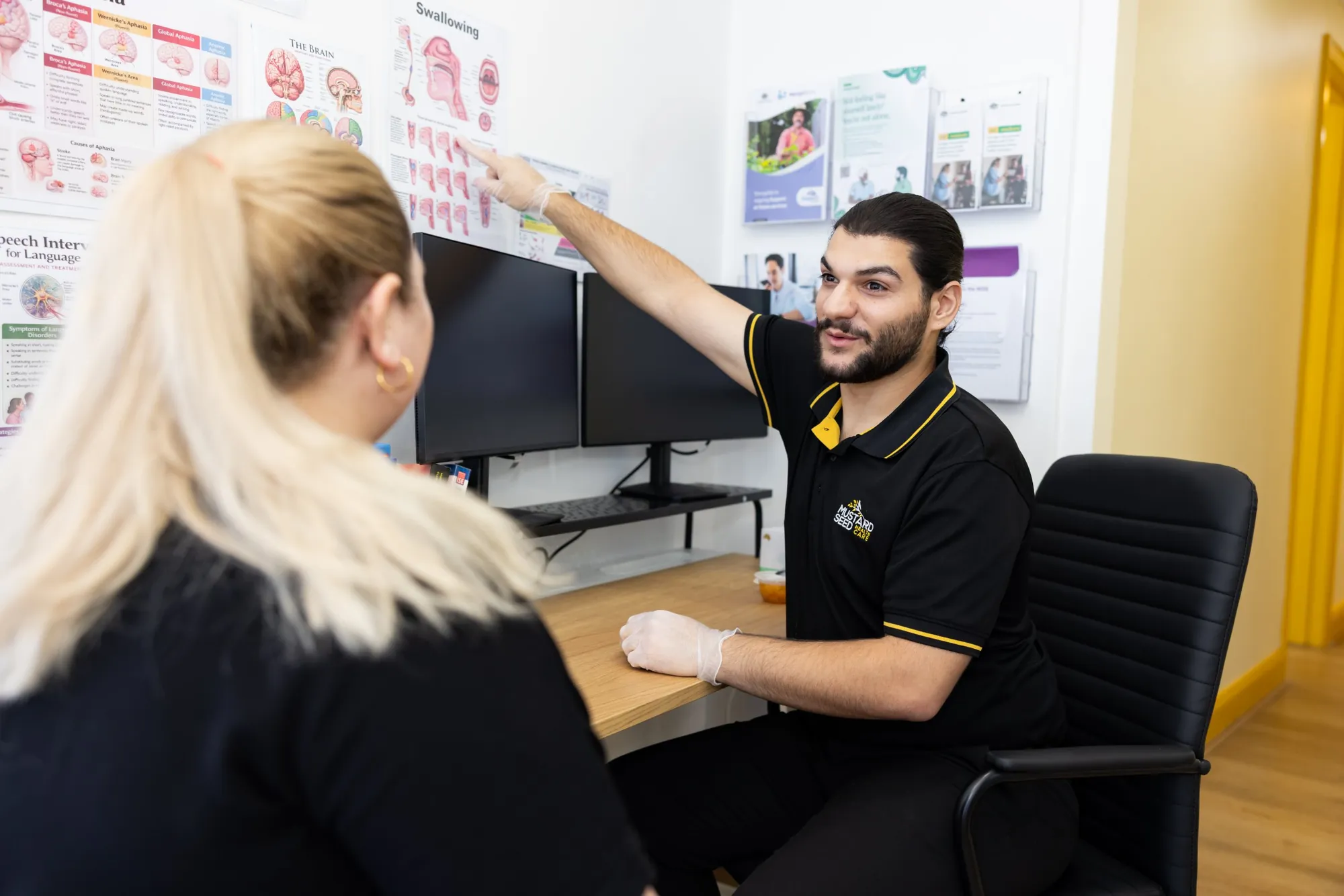
We see adults in our Yagoona clinic, via telehealth, at home, or in residential aged care (nursing homes), wherever suits the person best. A family member or close friend is welcome to come along, and it often helps.
During the Assessment
We look at talking, understanding, reading and writing, and at the everyday situations that matter most, such as phone calls, conversations at home or returning to work. We also ask about goals, because therapy should focus on what the person wants to be able to do.
Plan and Report
We explain what we found in plain language, using written key words and pictures where they help. You'll receive a report with goals and recommendations, usually within two weeks, with a copy sent to the GP.
Therapy
How We Work With People With Aphasia
Therapy is built around real life. If someone wants to order a coffee, read the news, talk with their grandchildren or get back to work, that's what we practise.
Your role in therapy
We make communication easier for everyone involved. Family members learn simple strategies that make conversations less frustrating, and we can set up supports such as key word lists, picture boards or communication apps.
What we work on
- Word finding and sentence practice
- Understanding and conversation skills
- Reading, writing, spelling and using technology
- Communication partner training for family and carers
- Communication aids, from simple boards to speech-generating apps (AAC)
- Help preparing to return to work, study or community activities
Language Therapy
Targeted practice to rebuild word finding, sentences, understanding, reading and writing, matched to the person's goals.
Communication Partner Training
Practical strategies for family and friends, so everyday conversations become easier for everyone.
Supported Communication
Written key words, pictures, gestures and apps that help the person get their message across while language recovers.
What families can expect
What Progress Can Look Like
We set measurable goals and track progress carefully, so you always know where things stand and what comes next.
Ready to start? Our team is happy to answer your questions. There's no obligation, just a friendly conversation.
Refer NowCommon questions
Frequently Asked Questions
Still have questions? Our full FAQ page covers many more topics, or just give us a call and we'll help.
Related services
Related Services
Other areas our team supports. If you're not sure which is right for you, contact us and we'll point you in the right direction.
Stroke Rehabilitation
Communication and swallowing therapy to support recovery after stroke.
Learn moreCognitive Communication
Support with memory, attention and problem-solving after brain injury.
Learn moreReady to Get Started?
Not sure if this is the right fit? Contact us and we'll help you figure out the next step.
Prefer to talk? Call us on (02) 9052 6095