
Speech Pathology · Yagoona
Communication Support for Autistic Children
Neurodiversity-affirming Speech Pathology that respects how your child communicates and helps them be understood.
Overview
Our Approach to Autism
Every autistic child communicates in their own way. Some talk a lot, some use few or no spoken words, and many communicate through gestures, scripts, echolalia, devices or behaviour. All of these are communication, and they all tell us something important.
Our goal isn't to make children seem less autistic. It's to help them communicate what they need, want and think, in whatever way works best for them, and to help the people around them understand. That might mean building spoken language, introducing a communication device or supporting a child who learns language in chunks, known as Gestalt Language Processing.
We work closely with families, because you know your child best. Together, we focus on communication that makes daily life easier and helps your child feel heard at home, at preschool or school, and with friends.
Signs & symptoms
When Speech Pathology Can Help
Every child develops differently. If any of the signs below sound familiar, it's worth reaching out for a professional opinion, even if you're not sure.
You don't need an autism diagnosis to get support from us. If you have concerns about your child's communication, we're happy to help.
What to expect
Our Assessment Process
We know assessments can feel daunting. Our process is thorough but warm, and we take our time to understand your child as a whole person.
Initial Enquiry
Refer through our online form or give us a call. We'll have a relaxed chat about your child, your concerns and what you'd like support with.
Assessment Appointment
We see children in our Yagoona clinic or via telehealth. Beforehand, we'll ask about your child's development, interests and any previous reports, including from a paediatrician or psychologist.
During the Assessment
We follow your child's lead through play and their favourite activities, and watch how they communicate and understand. We'll ask what communication looks like at home, because children often show us different things in an unfamiliar room.
Feedback and Next Steps
We share our first impressions on the day. You'll then receive a clear, jargon-free report with our findings and recommendations, written to support NDIS planning where relevant.
Therapy
How We Support Autistic Children
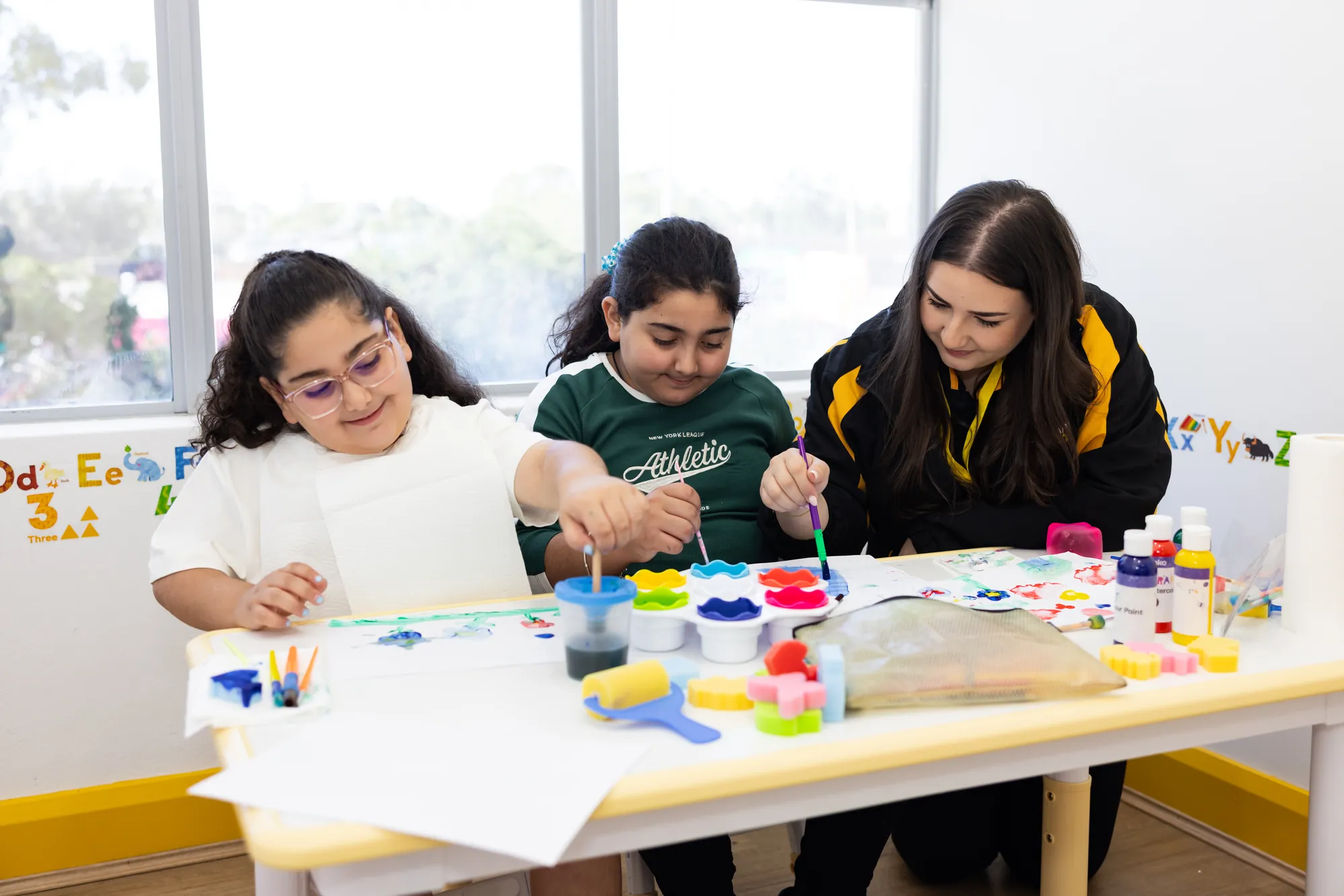
Therapy follows your child's interests and works with how they naturally communicate, rather than against it. Sessions are play-based, sensory-aware and paced to your child, so they feel safe and motivated.
Working together
Our team has training in approaches including Gestalt Language Processing, AAC, DIR Floortime and Key Word Sign, and we choose what fits your child, not the other way around.
What we work on
- Gestalt Language Processing support for children who learn language in chunks
- AAC, from picture systems to speech-generating apps
- Key Word Sign
- Building understanding of language and routines
- Support with play, interaction and shared attention
- Coaching for parents, and strategies to share with preschool or school
Gestalt Language Processing
Support for children who communicate using echolalia and learned phrases, helping them build towards flexible, self-generated language.
AAC
Communication tools, from picture boards to speech apps, that give your child a voice now while other skills develop.
Family Coaching
Practical strategies for parents and carers, so communication support continues through everyday routines.
What families can expect
What Progress Can Look Like
We set measurable goals and track progress carefully, so you always know where your child is and where they're heading.
Ready to start? Our team is happy to answer your questions. There's no obligation, just a friendly conversation.
Refer NowCommon questions
Frequently Asked Questions
Still have questions? Our full FAQ page covers many more topics, or just give us a call and we'll help.
Related services
Related Services
Other areas our team supports. If you're not sure which is right for you, contact us and we'll point you in the right direction.
Social Communication
Helping children navigate conversations, interpret social cues, and build meaningful connections with peers and family.
Learn moreLanguage Delays
Assessment and therapy for children whose understanding or use of language is behind expectations.
Learn moreReady to Get Started?
Not sure if this is the right fit? Contact us and we'll help you figure out the next step.
Prefer to talk? Call us on (02) 9052 6095