
Speech Pathology · Yagoona
Swallowing (Dysphagia) Assessments for Adults
Clear answers and practical mealtime plans for adults who have trouble swallowing, and for the families and carers who support them.
Overview
When Eating and Drinking Becomes Hard
Swallowing is something most of us never think about until it becomes difficult. Coughing during meals, food sticking in the throat or a chest infection that keeps coming back can all be signs that swallowing isn't working as safely as it should. The medical term for this is dysphagia.
Swallowing difficulties are common after a stroke and with conditions such as Parkinson's disease, dementia, motor neurone disease and acquired brain injury. They can also develop gradually with age, or after surgery or illness. Left unmanaged, they can lead to choking, chest infections, weight loss and dehydration, and they can quietly take the enjoyment out of meals.
A swallowing assessment with a Speech Pathologist tells you what is happening and what to do about it. We look at how the person eats and drinks, identify what makes swallowing safer, and give everyone involved in their care a clear plan to follow. Our aim is always the safest and most enjoyable mealtimes possible, with no more restrictions than needed.
If you have a Support at Home package through My Aged Care, Speech Pathology may be funded through your package. Talk to your provider or contact our team and we'll help you work it out.
Signs & symptoms
Signs of a Swallowing Difficulty
Everyone's experience is different. If any of the signs below sound familiar, it's worth reaching out for a professional opinion, even if you're not sure.
Sudden difficulty swallowing, especially with facial drooping, slurred speech or weakness, can be a sign of stroke. Call 000 immediately. If someone is choking and can't breathe, call 000.
What to expect
Our Assessment Process
We know assessments can feel daunting. Our process is thorough but warm, and we take the time to understand the whole person, not just the diagnosis.
Referral and Background
Refer through our online form or give us a call. We'll ask about medical history, current diet and drinks, medications and any recent chest infections, and request relevant reports from the GP or hospital.
Assessment Appointment
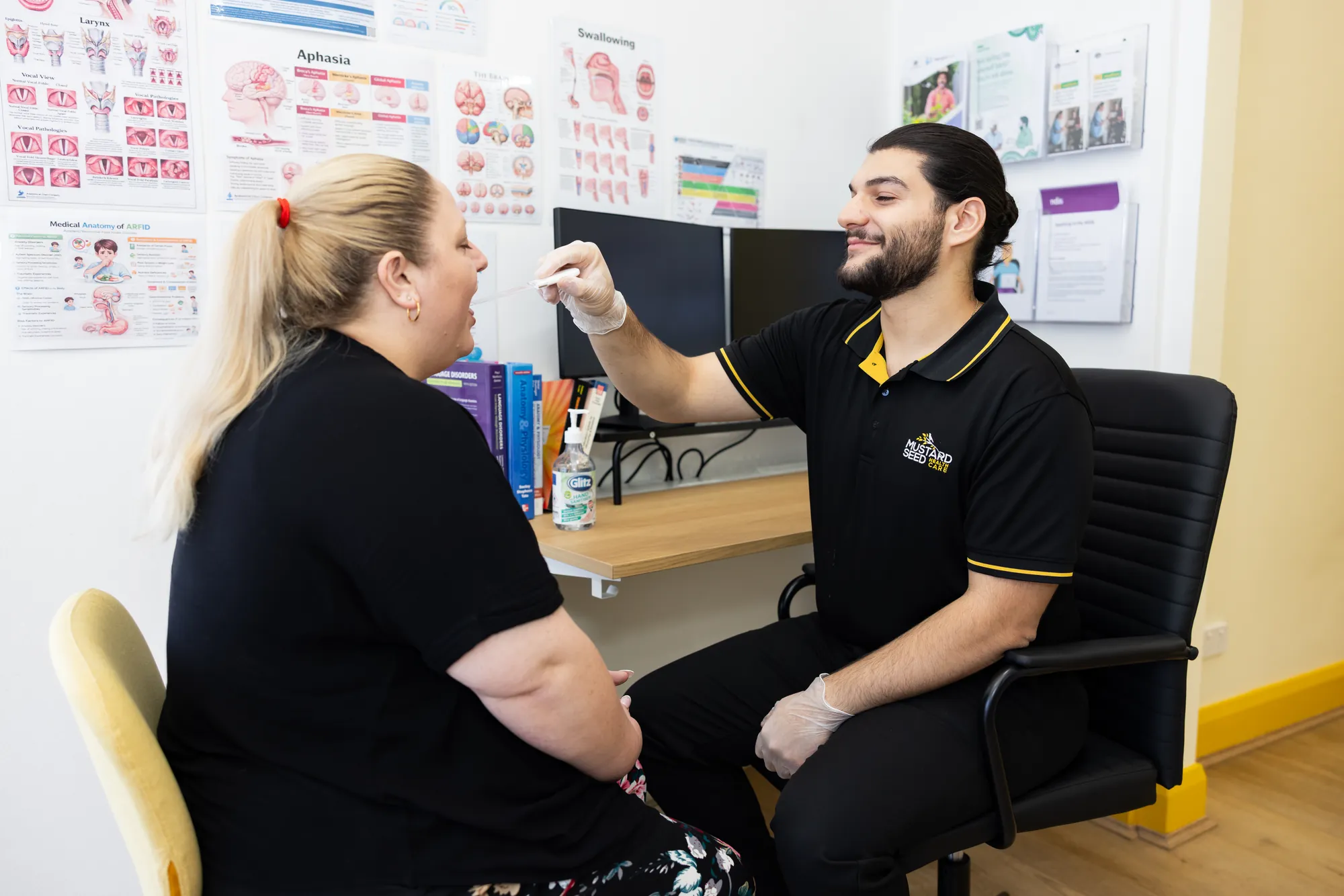
We see adults in our Yagoona clinic, via telehealth, at home, or in residential aged care (nursing homes), wherever suits the person best. Family, carers and support workers are welcome and encouraged to attend.
During the Assessment
We check the muscles used for chewing and swallowing, then watch the person eat and drink a range of food and drink textures. If a more detailed look at the swallow is needed, such as a videofluoroscopy or FEES at a hospital, we'll explain why and help arrange it through the GP.
Mealtime Plan and Report
We talk through what we found on the day. You'll then receive a written report and Mealtime Management Plan, usually within two weeks, with a copy sent to the GP. The plan covers safe food and drink textures, positioning and strategies, written so family, carers and support workers can follow it with confidence.
Therapy
How We Support Safer Swallowing
Every recommendation is practical and tailored to the person, their health and the foods they enjoy. We work hard to keep meals familiar and enjoyable, and we only change food or drink textures when there's a clear reason to.
What we work on
- Food and drink texture recommendations using the IDDSI framework, the international standard used across Australian hospitals and aged care
- Positioning, pacing and strategies that make each mouthful safer
- Swallowing exercises, where they're likely to help
- Training for family, carers and support workers so the plan is followed consistently
- Regular reviews as health or needs change
Clinical Swallowing Assessment
A thorough look at chewing, swallowing and mealtime safety, with clear findings you can act on straight away.
Mealtime Management Plans
A written plan everyone involved in care can follow, often required for NDIS participants and in residential aged care.
Carer and Support Worker Training
Practical, hands-on guidance so the people preparing meals and supporting mealtimes feel confident doing it safely.
What families can expect
What You Can Expect
We set measurable goals and track progress carefully, so you always know where things stand and what comes next.
Ready to start? Our team is happy to answer your questions. There's no obligation, just a friendly conversation.
Refer NowCommon questions
Frequently Asked Questions
Still have questions? Our full FAQ page covers many more topics, or just give us a call and we'll help.
Related services
Related Services
Other areas our team supports. If you're not sure which is right for you, contact us and we'll point you in the right direction.
Stroke Rehabilitation
Communication and swallowing therapy to support recovery after stroke.
Learn moreParkinson's Disease Support
Voice and speech therapy to maintain loud, clear communication.
Learn moreReady to Get Started?
Not sure if this is the right fit? Contact us and we'll help you figure out the next step.
Prefer to talk? Call us on (02) 9052 6095