

Speech Pathology · Yagoona
Stuttering Therapy for Children & Teens
Evidence-based support for children who stutter, and for the families who want to help.
Overview
Understanding Stuttering
Stuttering is common. Many children stutter at some point, usually starting between the ages of 2 and 5, often when their language is developing quickly. It can appear suddenly, come and go, and look different from one day to the next.
Stuttering can sound like repeating sounds or words ("I-I-I want"), stretching sounds ("ssssun") or getting stuck with no sound coming out. Some children also show tension, blink or look away while they're stuck. Stuttering isn't caused by anything parents did, and it isn't a sign of anxiety or low intelligence.
Some young children stop stuttering on their own, but many don't, and it's hard to predict which will. Treatment is most effective in the preschool years, so it's worth seeking advice early rather than waiting. For school-aged children and teens, therapy can still make a real difference to fluency, confidence and how they feel about talking.
Signs & symptoms
Signs of Stuttering
Every child develops differently. If any of the signs below sound familiar, it's worth reaching out for a professional opinion, even if you're not sure.
If your child has been stuttering for more than a few months, or it's causing them distress, it's worth booking an assessment now rather than waiting.
What to expect
Our Assessment Process
We know assessments can feel daunting. Our process is thorough but warm, and we take our time to understand your child as a whole person.
Initial Enquiry
Refer through our online form or give us a call. We'll chat about when the stuttering started, how it's changed and how your child feels about talking.
Assessment Appointment
We see children and teens in our Yagoona clinic or via telehealth. If you can, record a short video of your child talking at home, since stuttering can vary a lot from day to day.
During the Assessment
We listen to your child talking in conversation and play, measure how often and how severely they stutter, and look at how stuttering affects them. For older children and teens, we talk with them directly about their experience.
Feedback and Next Steps
We share our first impressions on the day. You'll then receive a clear, jargon-free report with our findings and recommendations.
Therapy
How We Help
Therapy depends on your child's age. For preschoolers, parents are trained to deliver much of the treatment at home in short daily sessions, with regular guidance from us. Our team has experience delivering evidence-based approaches such as the Lidcombe Program, an established treatment for young children who stutter.
Working together
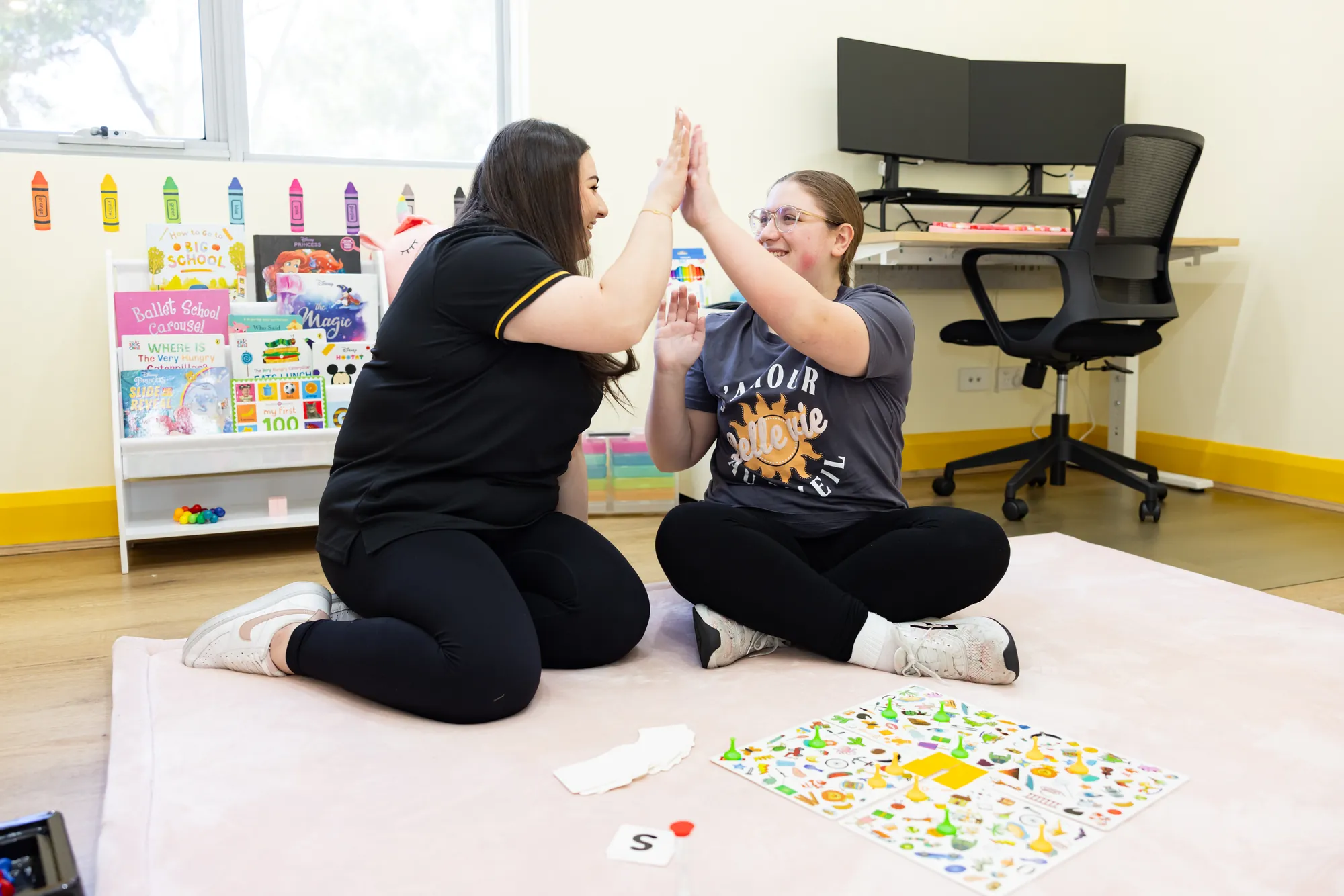
For school-aged children and teens, therapy focuses on techniques for smoother speech, managing moments of stuttering, and building confidence to speak up in class, with friends and in new situations.
What we work on
- Parent-delivered treatment for preschoolers
- Techniques for smoother, easier speech
- Strategies for managing moments of stuttering
- Building confidence and reducing avoidance
- Support for speaking in class and with friends
- Information for teachers, with your consent
Early Stuttering Treatment
Parent-delivered, evidence-based treatment for preschoolers, with regular clinic sessions to guide progress.
Speech Techniques
For older children and teens, structured practice of techniques that make speech smoother and easier.
Confidence Building
Helping young people feel more in control and more confident to speak in any situation.
What families can expect
What Progress Can Look Like
We set measurable goals and track progress carefully, so you always know where your child is and where they're heading.
Ready to start? Our team is happy to answer your questions. There's no obligation, just a friendly conversation.
Refer NowCommon questions
Frequently Asked Questions
Still have questions? Our full FAQ page covers many more topics, or just give us a call and we'll help.
Related services
Related Services
Other areas our team supports. If you're not sure which is right for you, contact us and we'll point you in the right direction.
Language Delays
Assessment and therapy for children whose understanding or use of language is behind expectations.
Learn moreSocial Communication
Helping children and teens navigate conversations and social situations.
Learn moreReady to Get Started?
Not sure if this is the right fit? Contact us and we'll help you figure out the next step.
Prefer to talk? Call us on (02) 9052 6095