

Speech Pathology · Yagoona
Speech Pathology for Parkinson's Disease
Practical support to keep your voice strong, your speech clear and mealtimes safe as Parkinson's changes over time.
Overview
How Parkinson's Affects Speech and Swallowing
Most people with Parkinson's disease notice changes to their voice and speech at some point. The voice often becomes quieter and flatter, speech can sound rushed or mumbled, and the person may not realise how soft they sound, because to them it feels normal. Family members often notice first, asking them to repeat themselves more and more.
Swallowing can change too. Meals may take longer, tablets can become harder to swallow, and coughing while eating can increase the risk of chest infections.
Speech Pathology helps at every stage. Starting early, even when changes are mild, gives the best chance of keeping communication strong. Later on, we focus on practical strategies, communication aids and safe swallowing, so the person stays part of the conversations and meals they enjoy.
Signs & symptoms
Signs to Look Out For
Everyone's experience is different. If any of the signs below sound familiar, it's worth reaching out for a professional opinion, even if you're not sure.
If swallowing suddenly gets worse, or you're having repeated chest infections, speak with your GP promptly.
What to expect
Our Assessment Process
We know assessments can feel daunting. Our process is thorough but warm, and we take the time to understand the whole person, not just the diagnosis.
Referral and Background
Refer through our online form or give us a call. We'll ask about your diagnosis, medications and any neurologist or GP reports, along with the changes you or your family have noticed.
Assessment Appointment
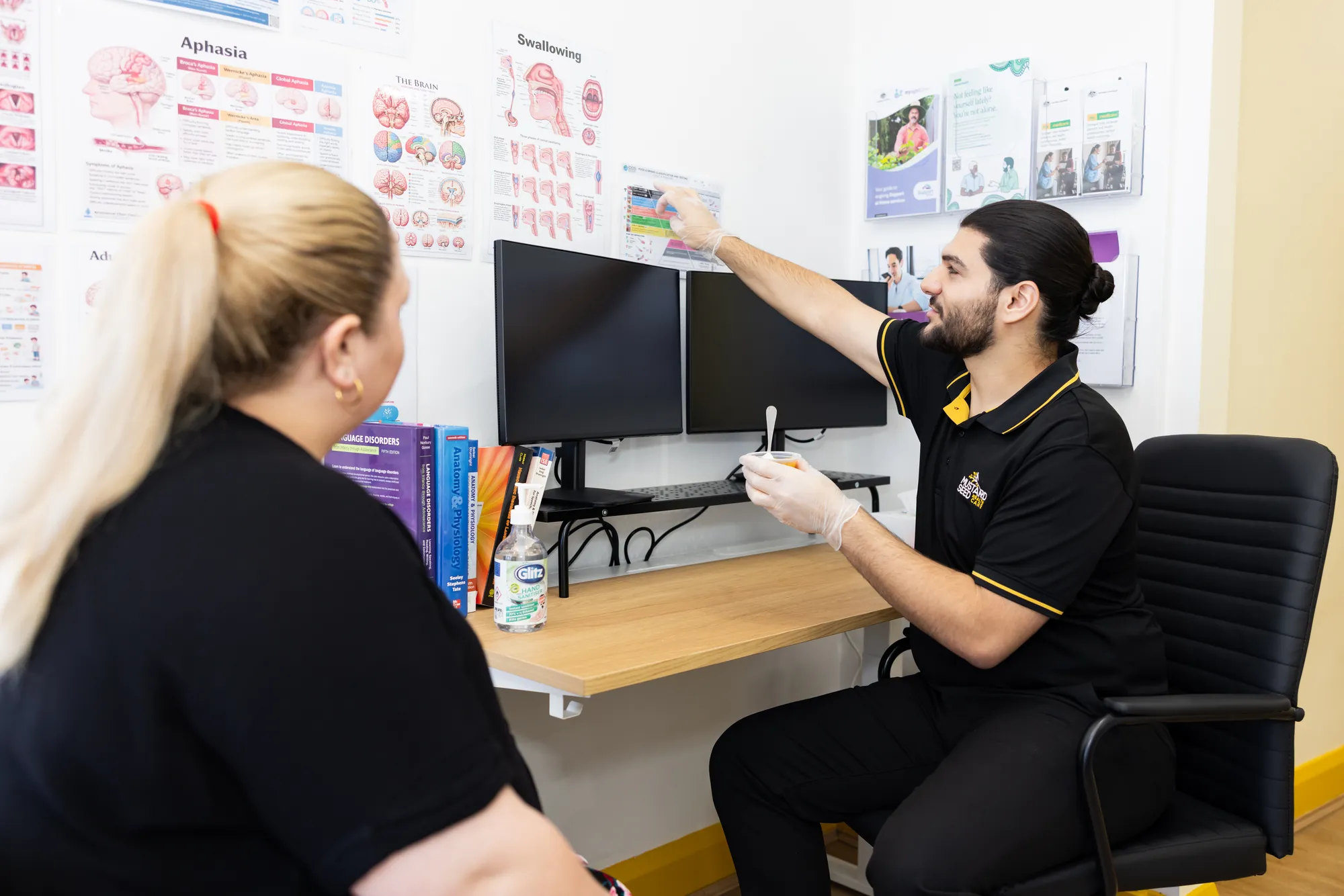
We see adults in our Yagoona clinic, via telehealth, at home, or in residential aged care (nursing homes), wherever suits the person best. Parkinson's symptoms can vary through the day, so we'll try to book a time that suits your medication routine.
During the Assessment
We listen to your voice and speech in conversation, look at loudness and clarity, and check swallowing where there are concerns. We'll also ask how communication is going at home, on the phone and out in the community.
Plan and Report
We explain what we found in plain language and agree on goals together. You'll receive a report with recommendations, usually within two weeks, with a copy sent to the GP and, with consent, your neurologist.
Therapy
How We Support People With Parkinson's
Therapy for Parkinson's is active and practice-based. We focus on building a stronger, clearer voice and making that effort automatic in everyday conversation, not just in the therapy room. Home practice is a big part of it, and we keep it simple and achievable.
What we work on
- Voice and loudness training
- Speech clarity and pacing strategies
- Practice in real conversations, phone calls and group settings
- Swallowing assessments and Mealtime Management Plans
- Communication aids and apps if speech becomes harder
- Strategies for family members and carers
Voice and Speech Therapy
Intensive, structured practice to build a louder, clearer voice and carry it into everyday conversation.
Swallowing Support
Assessment and practical mealtime strategies to keep eating, drinking and taking tablets as safe as possible.
Planning Ahead
As needs change, we put communication supports in place early, so the person always has a way to be heard.
What families can expect
What You Can Expect
We set measurable goals and track progress carefully, so you always know where things stand and what comes next.
Ready to start? Our team is happy to answer your questions. There's no obligation, just a friendly conversation.
Refer NowCommon questions
Frequently Asked Questions
Still have questions? Our full FAQ page covers many more topics, or just give us a call and we'll help.
Related services
Related Services
Other areas our team supports. If you're not sure which is right for you, contact us and we'll point you in the right direction.
Stroke Rehabilitation
Communication and swallowing therapy to support recovery after stroke.
Learn moreCognitive Communication
Support with memory, attention and problem-solving after brain injury.
Learn moreReady to Get Started?
Not sure if this is the right fit? Contact us and we'll help you figure out the next step.
Prefer to talk? Call us on (02) 9052 6095