
Speech Pathology · Yagoona
Is Your Child a Late Talker?
Playful, evidence-based support for toddlers who are slow to start talking, with parents involved every step of the way.
Overview
What "Late Talking" Really Means
If your toddler isn't saying as many words as other children their age, it's natural to feel worried. The good news is you're paying attention, and that's exactly where helpful change begins.
A late talker is a young child, usually between 18 months and 3 years, who is developing typically in other areas, such as play, social connection and motor skills, but has a smaller spoken vocabulary than expected for their age. Speech Pathologists assess this carefully, because every child's communication develops differently.
Some late talkers catch up on their own. These children are sometimes called "late bloomers". Others benefit from therapy to help them build the words and confidence they need. Our role is to understand your child, work out what's going on, and give your family clear, practical next steps, without pressure or alarm.
Signs & symptoms
Signs Your Child May Be a Late Talker
Every child develops differently. If any of the signs below sound familiar, it's worth reaching out for a professional opinion, even if you're not sure.
If any of these resonate, even if your child doesn't match every point, trust your instincts. A conversation with a Speech Pathologist is always worthwhile, and early support makes a meaningful difference.
What to expect
Our Assessment Process
We know assessments can feel daunting. Our process is thorough but warm, and we take our time to understand your child as a whole person.
Initial Enquiry
Reach out by phone, email, or our online form. We'll have a warm, no-pressure chat about your concerns, answer your questions, and help you decide whether an assessment is the right next step.
Assessment Appointment
We schedule a dedicated session at a time that works for your family, in our Yagoona clinic or via telehealth. Before the appointment, we'll ask you to share any relevant background (developmental history, hearing checks, childcare or GP reports).
During the Assessment
Your child plays and interacts naturally while we observe and gently introduce age-appropriate activities. We look at vocabulary, understanding, sound development, social communication, and play skills. You're in the room the whole time. It's relaxed and child-led, not a test.
Feedback & Next Steps
On the same day, we share our initial impressions and discuss what we've noticed. You'll then receive a clear, jargon-free report with our findings and tailored recommendations, whether that's parent coaching, direct therapy, a review in a few months, or referral to another specialist.
Therapy
How We Work with Late Talkers
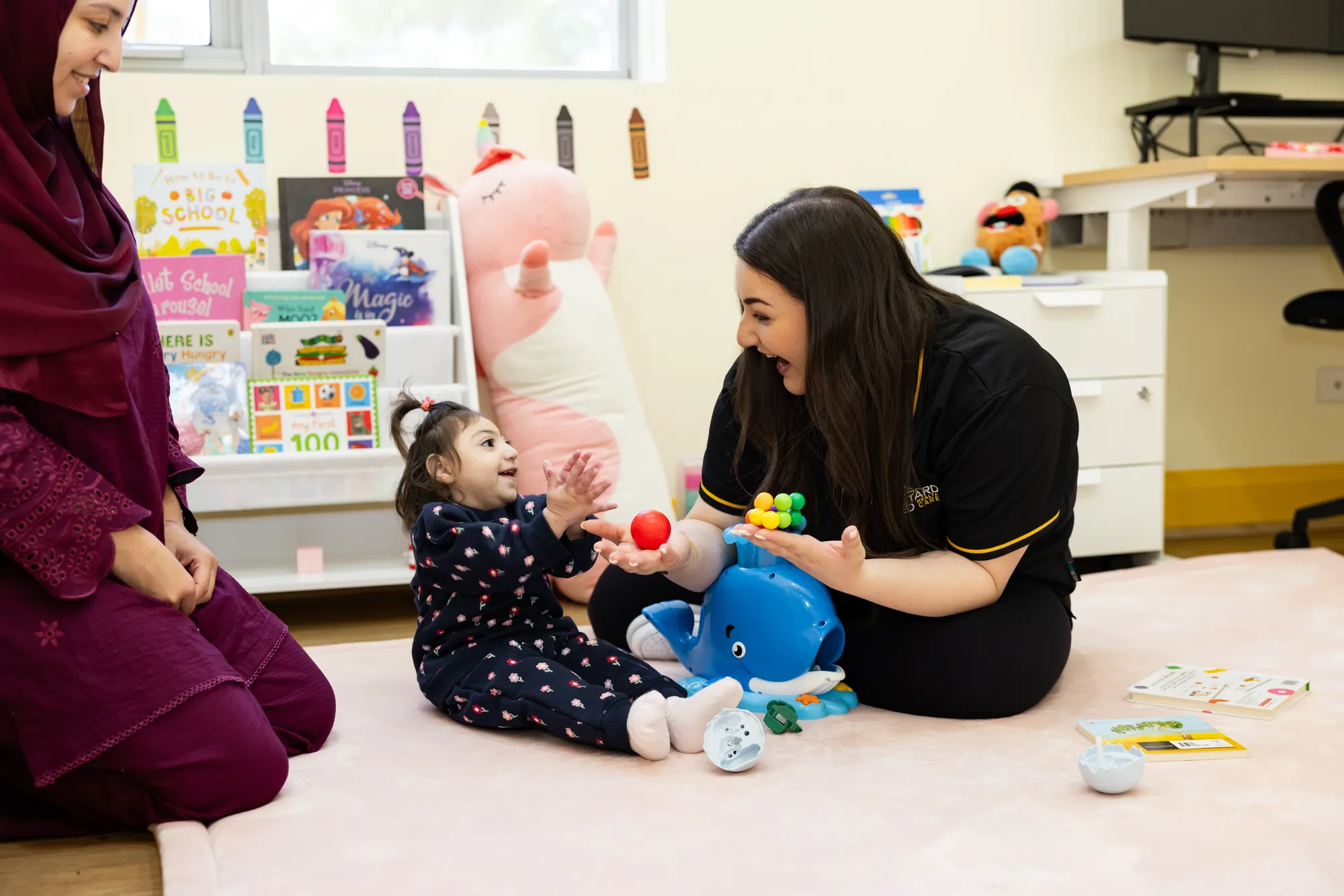
Therapy for late talkers is playful, child-led and built around the things your child already loves. Every session should feel like fun, not work. Sessions are available in our Yagoona clinic, via telehealth, and through limited home and childcare visits.
Working together
We believe parents are a child's most powerful communication teachers, so you'll be actively involved in every step. We coach you in simple, proven strategies you can weave into everyday moments like bath time, meals, play and bedtime, so your child gets rich language practice all day long, not just during sessions. Sessions are goal-driven: we set meaningful, measurable goals together with you, track progress carefully, and adjust our approach as your child grows. You'll always know what we're working on and why.
What we work on
- Building first words and vocabulary
- Combining words into short phrases
- Understanding words and simple instructions
- Using gestures, signs and sounds to communicate
- Play and turn-taking skills
- Parent coaching for everyday routines
Parent Coaching
We teach you practical, evidence-based strategies to build your child's language during everyday routines, so therapy continues naturally long after the session ends.
Play-Based Language Therapy
Child-led play sessions that follow your child's interests and create natural, joyful opportunities for new words and communication to emerge.
Targeted Vocabulary Building
Fun, structured activities that help your child learn and use the specific words and concepts they need most right now.
What families can expect
What Progress Typically Looks Like
We set measurable goals and track progress carefully, so you always know where your child is and where they're heading.
Ready to start? Our team is happy to answer your questions. There's no obligation, just a friendly conversation.
Refer NowCommon questions
Frequently Asked Questions
Still have questions? Our full FAQ page covers many more topics, or just give us a call and we'll help.
Related services
Related Services
Other areas our team supports. If you're not sure which is right for you, contact us and we'll point you in the right direction.
Language Delays
Assessment and therapy for children whose understanding or use of language is behind expectations.
Learn moreReady to Get Started?
Not sure if this is the right fit? Contact us and we'll help you figure out the next step.
Prefer to talk? Call us on (02) 9052 6095