

Speech Pathology · Yagoona
Feeding Therapy for Children
Gentle, practical support for children who find eating hard, and for the parents trying to help them at every meal.
Overview
More Than Fussy Eating
Most young children go through phases of fussy eating. For some, though, eating is genuinely hard. They may eat only a handful of foods, gag or vomit with new textures, struggle to chew, or find mealtimes so stressful that the whole family dreads them.
Feeding difficulties can be linked to how a child's mouth muscles work, sensory sensitivities, past medical issues such as reflux, or anxiety around food. They're common in children who were born early, autistic children and children with developmental delays, but they can affect any child.
Speech Pathologists are trained in the skills involved in eating, chewing and swallowing. We help children build those skills gradually and without pressure, and we help parents feel calmer and more confident at mealtimes.
Signs & symptoms
Signs Your Child May Need Support
Every child develops differently. If any of the signs below sound familiar, it's worth reaching out for a professional opinion, even if you're not sure.
If your child is losing weight, not growing as expected, or regularly coughing or choking when eating or drinking, please see your GP or paediatrician promptly as well.
What to expect
Our Assessment Process
We know assessments can feel daunting. Our process is thorough but warm, and we take our time to understand your child as a whole person.
Initial Enquiry
Refer through our online form or give us a call. We'll chat about your child's eating, growth and any medical history.
Assessment Appointment
We see children in our Yagoona clinic or via telehealth. We'll ask you to bring some foods your child eats and a few they find difficult, and any reports from your GP, paediatrician or Dietitian.
During the Assessment
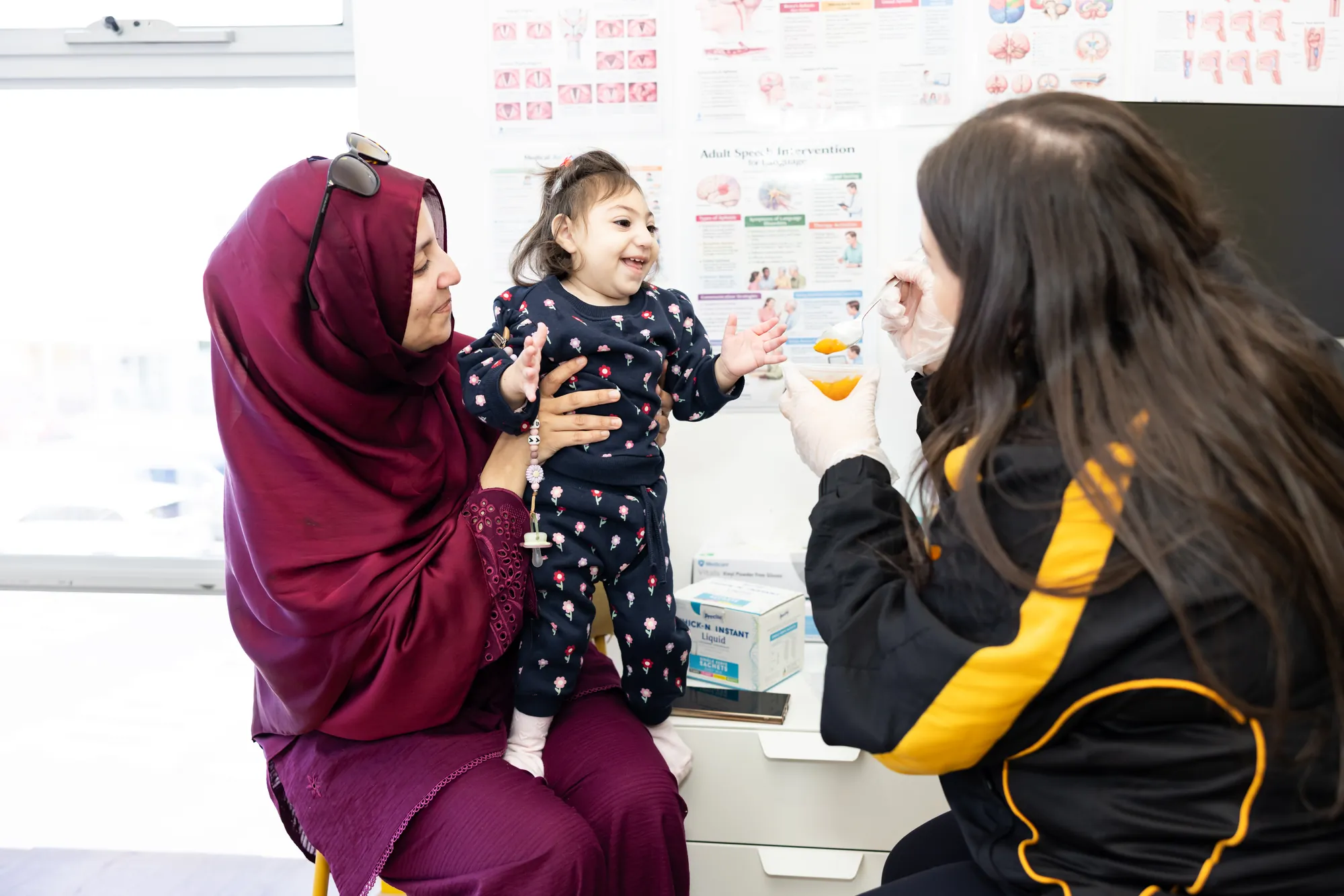
We watch your child eat and look at chewing, swallowing, mouth movements and how they respond to different textures. We'll also talk about mealtime routines at home, because what happens around the meal matters as much as the food.
Feedback and Next Steps
We share our first impressions on the day. You'll then receive a clear, jargon-free report with our findings and recommendations. Where needed, we'll suggest involving a Dietitian or Occupational Therapist.
Therapy
How We Help
Feeding therapy is gentle and never forced. We build skills and comfort step by step, starting from the foods your child already accepts, so they feel safe enough to explore new ones.
Working together
Our team has training from the Brisbane Feeding Clinic, Babble & Munch and MyoMunchee, which means we look at both the skills and the sensory side of eating.
What we work on
- Building chewing and oral motor skills
- Gradual exposure to new foods and textures
- Moving from purées to lumpy and solid foods
- Reducing gagging and food-related anxiety
- Calm, structured mealtime routines
- Coaching for parents so progress continues at home
Oral Motor Skills
Activities that build the mouth strength and coordination needed for chewing and managing different textures.
Gradual Food Exploration
Step-by-step, pressure-free exposure to new foods, starting with what your child already accepts.
Parent Coaching
Practical strategies to make mealtimes calmer and more positive for the whole family.
What families can expect
What Progress Can Look Like
We set measurable goals and track progress carefully, so you always know where your child is and where they're heading.
Ready to start? Our team is happy to answer your questions. There's no obligation, just a friendly conversation.
Refer NowCommon questions
Frequently Asked Questions
Still have questions? Our full FAQ page covers many more topics, or just give us a call and we'll help.
Related services
Related Services
Other areas our team supports. If you're not sure which is right for you, contact us and we'll point you in the right direction.
Ready to Get Started?
Not sure if this is the right fit? Contact us and we'll help you figure out the next step.
Prefer to talk? Call us on (02) 9052 6095