Leaving hospital after a stroke is a big milestone. It's also when many people and families feel most alone. Hospital therapy often winds down, yet difficulties with talking, understanding, reading or swallowing can still affect everyday life. One of the most common things we hear is "I was told most recovery happens in the first few months." The research tells a more hopeful story.
How a stroke can affect communication
A stroke can affect communication in different ways:
- Aphasia: difficulty finding words, understanding conversation, reading or writing
- Dysarthria: slurred or unclear speech caused by muscle weakness
- Apraxia of speech: difficulty planning the movements needed to speak
- Cognitive communication changes: difficulty with attention, memory or keeping track of a conversation
Swallowing can also be affected, which can make eating and drinking unsafe.
Recovery can continue for years
Speech Pathology helps people with aphasia after stroke. A Cochrane review found that therapy improved functional communication, reading, writing and expressive language compared with no therapy. It also found that therapy at higher intensity or over a longer period was linked to better functional communication, although intensive programs don't suit everyone (Brady et al., 2016).
Importantly, improvement isn't limited to the early months. In a large randomised controlled trial, adults who were at least six months after their stroke, and some up to six years after, received around three weeks of intensive therapy. Their everyday communication improved compared with people who were still waiting for therapy (Breitenstein et al., 2017).
In other words, it's rarely too late to work on communication.
What community therapy looks like
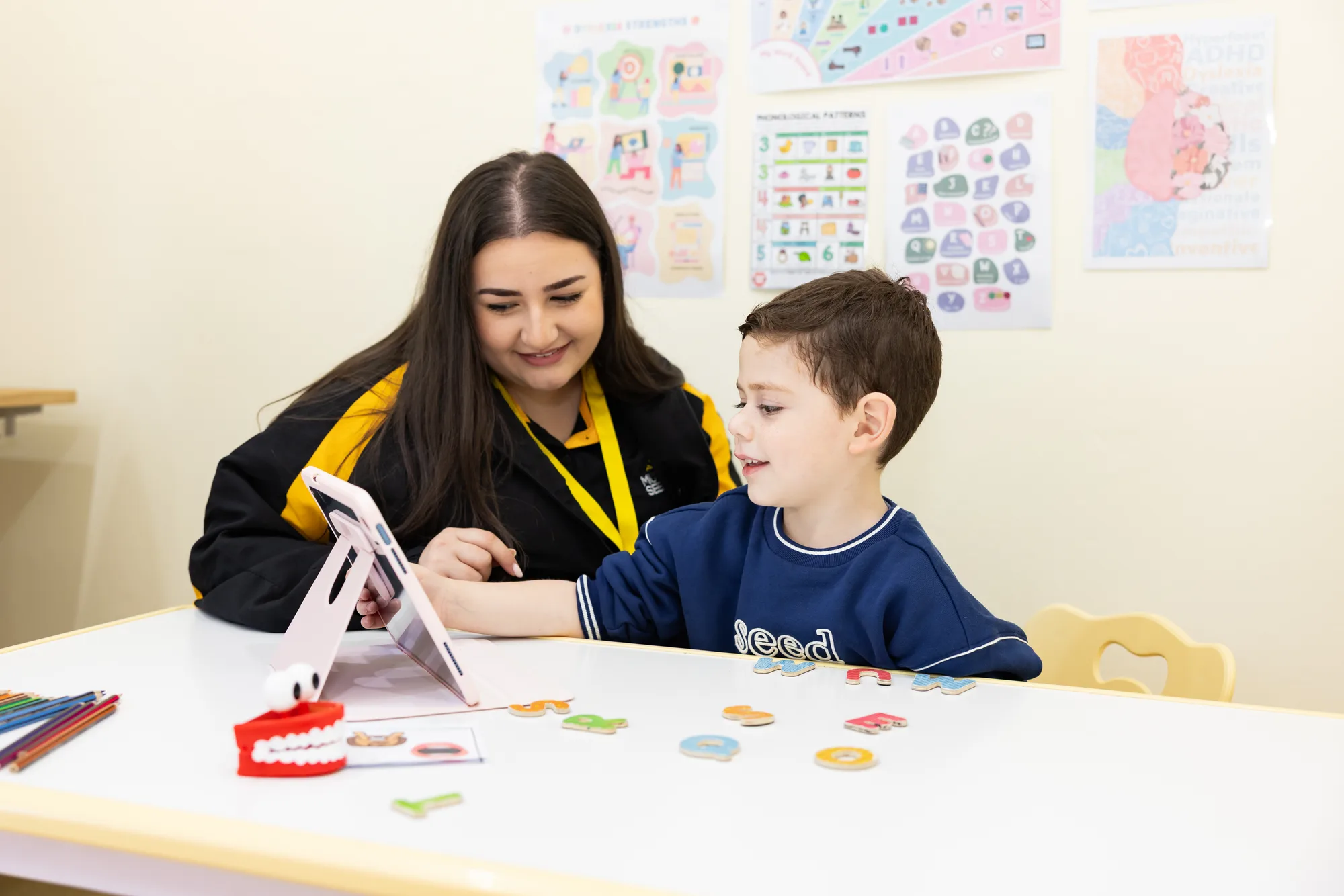
Therapy after hospital is built around real life. Rather than practising words in isolation, we focus on what matters to the person, such as:
- Talking with family and friends
- Using the phone, reading messages and managing appointments
- Ordering a coffee, going shopping or getting back to community activities
- Preparing to return to work or study
- Eating and drinking safely, with a Mealtime Management Plan where needed
Family members play a big role too. Simple communication strategies can make conversations less frustrating for everyone, and we teach these as part of therapy.
Funding options
Depending on your situation, therapy may be funded through a GP Chronic Condition Management Plan (Medicare), the NDIS for people under 65 with lasting disability, private health insurance extras cover, or aged care funding such as a Support at Home package through My Aged Care. Our team can help you work out which applies.
How we can help
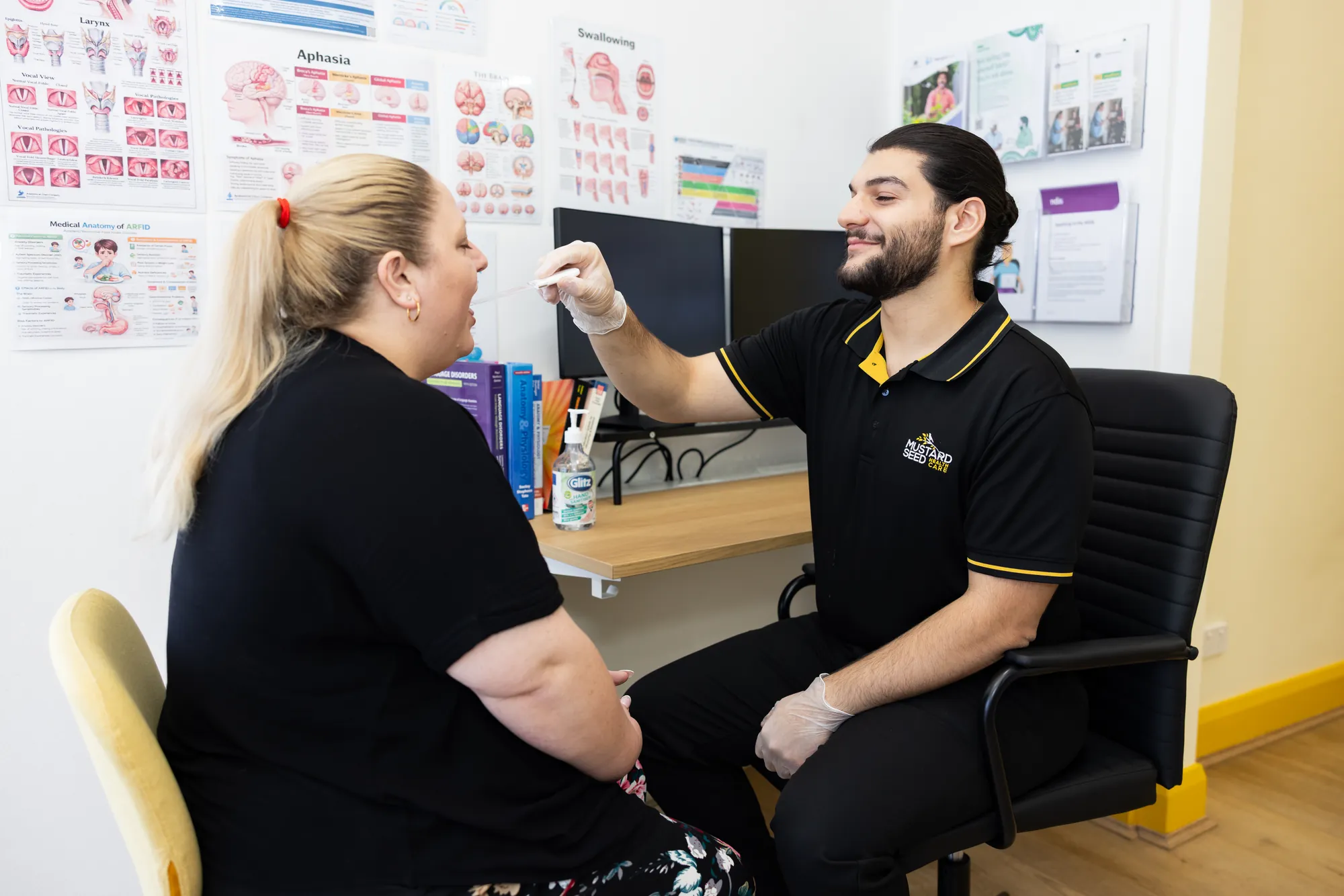
At Mustard Seed Health Care, we support adults after stroke at our Yagoona clinic, via telehealth, and with visits at home or in residential aged care. Our Speech Pathologists speak English and Arabic, and we work closely with families and the person's wider care team.
If you or someone you care about has had a stroke, refer through our online form or call us on (02) 9052 6095.
References
Brady, M. C., Kelly, H., Godwin, J., Enderby, P., & Campbell, P. (2016). Speech and language therapy for aphasia following stroke. Cochrane Database of Systematic Reviews, 2016(6), CD000425. https://doi.org/10.1002/14651858.CD000425.pub4
Breitenstein, C., Grewe, T., Flöel, A., et al. (2017). Intensive speech and language therapy in patients with chronic aphasia after stroke: A randomised, open-label, blinded-endpoint, controlled trial in a health-care setting. The Lancet, 389(10078), 1528–1538. https://doi.org/10.1016/S0140-6736(17)30067-3
 Feeding & Swallowing