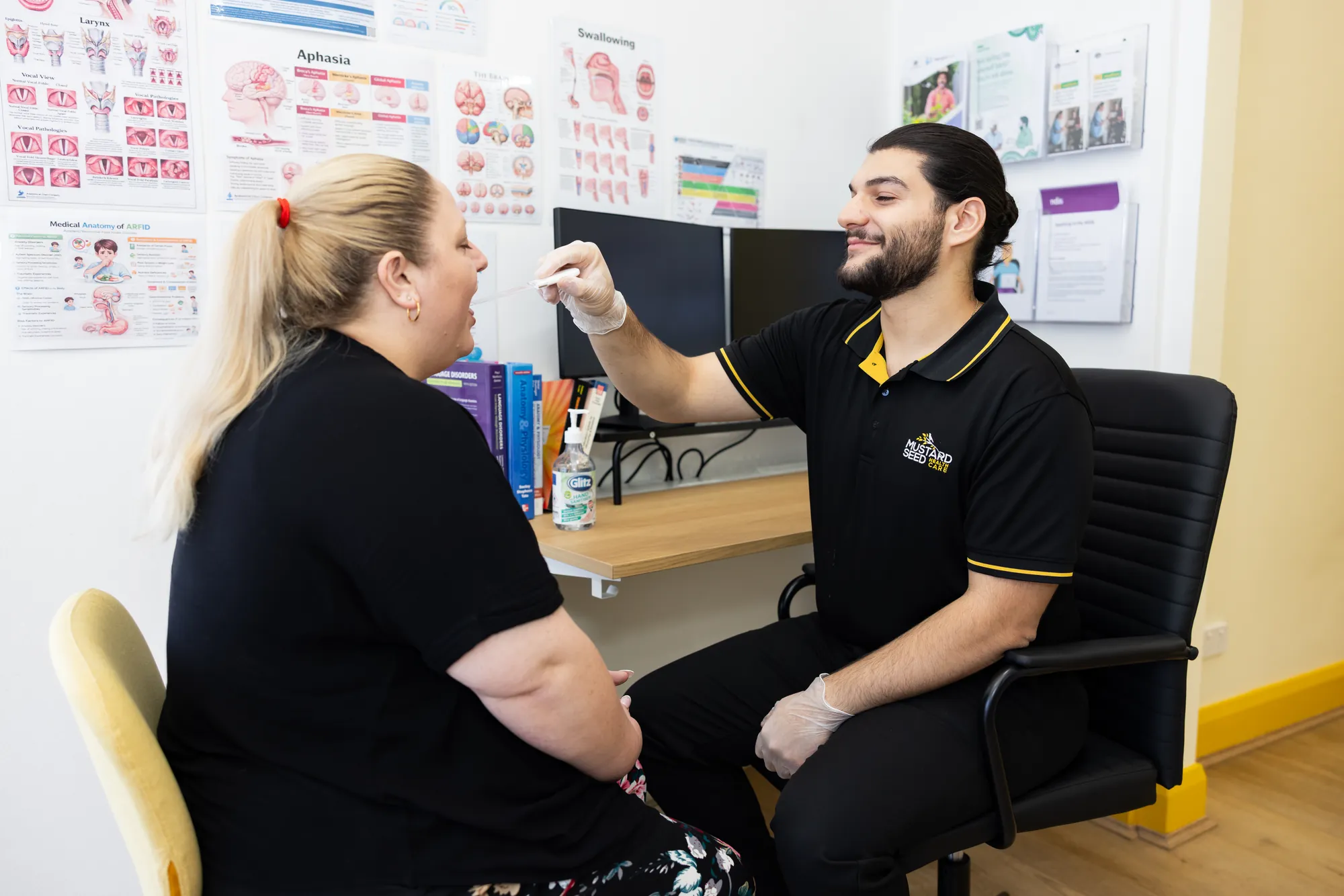
If you've been wondering whether your little one is talking as much as they should, you're not alone. Many parents notice something but aren't sure whether to wait or seek advice. My answer is always the same: it's never too early to ask.
Why the early years matter
The first five years are a time of rapid learning. Children are building the foundations for talking, understanding, playing, making friends and, later, reading and writing. When a child finds communication hard, support during these years can help them build skills while they are learning the fastest, and before frustration has a chance to build.
Early support also means families get clear answers sooner. Sometimes a child just needs a little boost. Sometimes an assessment shows something that benefits from ongoing support. Either way, knowing early helps.
What does early intervention look like?
Early intervention with a Speech Pathologist is playful and relaxed. For young children, therapy usually looks like play: books, songs, toys, snack time and everyday routines. We work on things like:
- Understanding words and simple instructions
- Using gestures, sounds and first words to communicate
- Putting words together into short phrases
- Taking turns and sharing attention during play
- Saying sounds more clearly, so others can understand
Parents make the biggest difference
One of the most encouraging findings in research is how much parents can help. A meta-analysis of parent-implemented language interventions found they had a significant, positive effect on young children's understanding and use of language (Roberts & Kaiser, 2011). A Cochrane review also found that, for children with speech and language delays, therapy delivered by trained parents achieved similar results to therapy delivered by clinicians (Law et al., 2003).
That's why I involve parents in every session. I show you simple strategies you can use during the moments you already share with your child, like bath time, meals, car trips and bedtime. A few minutes of the right kind of interaction, repeated every day, adds up quickly.
What about speaking two languages?
Many of our families speak Arabic or another language at home. Speaking two languages does not cause speech or language delays. Keep speaking the language you're most comfortable with, as rich language in any language helps your child learn. Our Speech Pathologists speak English and Arabic, so we can support your family in both.
When to seek advice
It's worth speaking to a Speech Pathologist if your child:
- Isn't babbling by 12 months
- Has fewer than 10 words by 18 months
- Isn't combining two words by age 2
- Is hard for familiar people to understand by age 3
- Seems to have trouble understanding what you say
- Gets very frustrated when they can't get their message across
Children under 9 may also be able to get support through the NDIS early childhood approach, and a diagnosis isn't always needed to get started.
How we can help
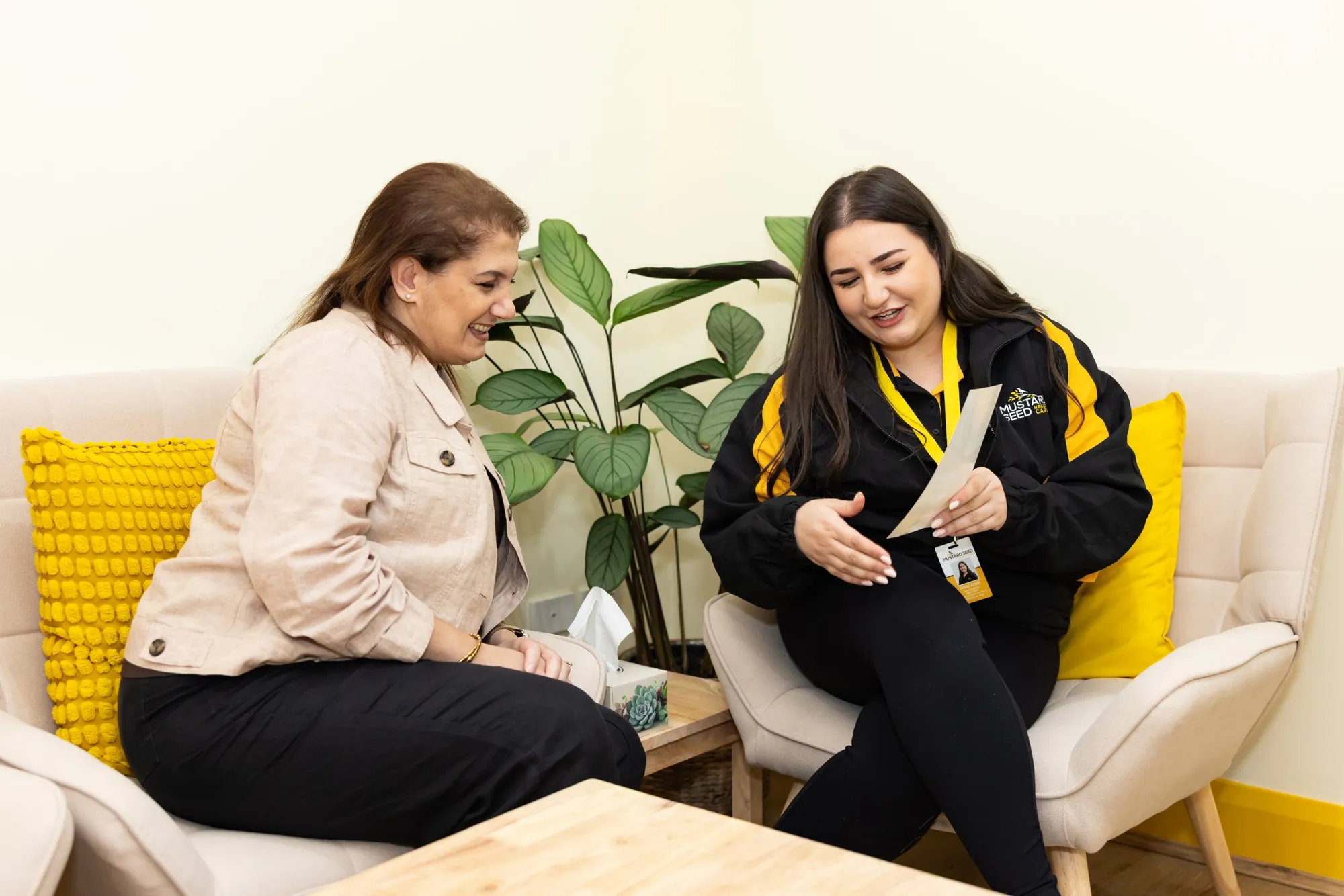
At Mustard Seed Health Care, we offer early intervention for young children at our Yagoona clinic and via telehealth, and we always work alongside parents. If you have any concerns about your child's communication, refer through our online form or call us on (02) 9052 6095. We'd love to help.
References
Law, J., Garrett, Z., & Nye, C. (2003). Speech and language therapy interventions for children with primary speech and language delay or disorder. Cochrane Database of Systematic Reviews, 2003(3), CD004110. https://doi.org/10.1002/14651858.CD004110
Roberts, M. Y., & Kaiser, A. P. (2011). The effectiveness of parent-implemented language interventions: A meta-analysis. American Journal of Speech-Language Pathology, 20(3), 180–199. https://doi.org/10.1044/1058-0360(2011/10-0055)
 Adult Communication